

Basant Panchami at Nizamuddin Dargah is not merely a festival—it is a living archive of India’s syncretic soul. For more than 700 years, every spring, the courtyard of Hazrat Nizamuddin Dargah in Delhi turns yellow—not just in colour, but in emotion, devotion, and collective memory.
Here, Hindus and Muslims celebrate Basant Panchami together, dissolving religious boundaries through music, flowers, poetry, and love. In a time when divisions dominate headlines, this tradition quietly continues—unchanged, resilient, and deeply human.
Table of Contents
What Is Basant Panchami at Nizamuddin Dargah?
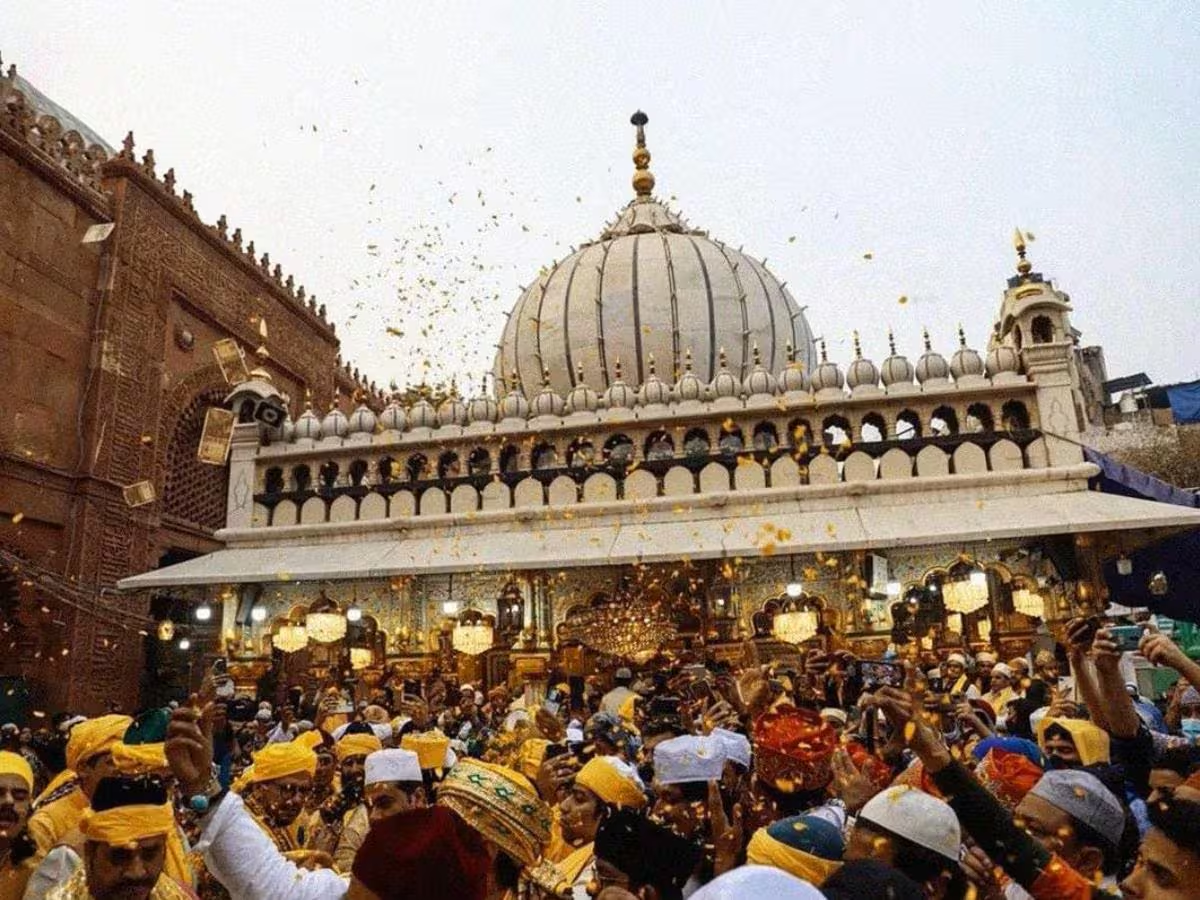
Basant Panchami at Nizamuddin Dargah is a unique cultural tradition where the Hindu festival welcoming spring is observed at a Sufi shrine with equal reverence and joy. While Basant Panchami is traditionally associated with Goddess Saraswati in Hindu belief, at the dargah of Hazrat Nizamuddin Auliya, the festival transcends religion. It becomes an expression of shared culture—Ganga-Jamuni tehzeeb in its purest form. Yellow flowers replace roses. Yellow clothes replace green chadars. Qawwalis echo through narrow lanes. Mustard petals rain from rooftops. Faith becomes celebration.

Watch For Haryanvi by Haryanvi Podcast Series on YouTube.
The 700-Year-Old Story Behind the Tradition
The roots of Basant Panchami at Nizamuddin Dargah trace back to an intimate moment of grief and love.
- A Saint’s Sorrow: Hazrat Nizamuddin Auliya once lost his beloved nephew. The saint withdrew into silence, overwhelmed by grief. Days passed. His disciples worried.
- Amir Khusrau’s Answer: Among them was his closest disciple, the legendary poet and musician Amir Khusrau. Searching for a way to ease his master’s sorrow, Khusrau noticed villagers celebrating Basant—dressed in yellow, singing folk songs, carrying mustard flowers. Inspired, Khusrau led a joyful procession to the dargah, singing in Purabi dialect, showering yellow petals, and celebrating spring right at his master’s doorstep.
- A Smile That Became History: The sight moved Hazrat Nizamuddin Auliya to tears. For the first time since his loss, he smiled—and joined the celebration. That moment became tradition.
How Basant Panchami at Nizamuddin Dargah Is Celebrated Today
Even after seven centuries, the rituals remain beautifully simple.
- Yellow Everywhere:- Devotees wear yellow turbans, scarves, and kurtas. Massive trays of marigold and mustard flowers are carried through the lanes surrounding the dargah.
- Qawwalis & Poetry:- Sufi qawwalis—many attributed to Amir Khusrau—fill the air. The music is devotional, joyful, and deeply emotional.
- Offerings Replace Rituals:- Instead of formal religious rites, people offer:
- Yellow chadars
- Flower petals
- Songs
- Silent prayers
Religion steps back. Humanity steps forward.


A Living Example of Ganga-Jamuni Tehzeeb
Basant Panchami at Nizamuddin Dargah stands as a rare, uninterrupted symbol of interfaith harmony.
Hindus play Basant.
Muslims lead the procession.
Tourists stand in awe.
Faith becomes collective.
This tradition proves that Indian culture was never singular—it was always shared. Read more about India’s syncretic traditions on Indian Culture Portal
Why This Tradition Matters Today
In an era marked by polarisation, Basant Panchami at Nizamuddin Dargah offers quiet resistance—without slogans, without protests.
It reminds us that:
- Faith can coexist
- Traditions can evolve
- Love can outlive ideology
This is not nostalgia.
This is continuity.
Basant Panchami at Nizamuddin Dargah in Modern Media
Over the years, the festival has been documented by historians, photographers, and cultural storytellers. Leading publications like Times Now and cultural archives such as GPMN India Publication have highlighted its importance.

Visiting Basant Panchami at Nizamuddin Dargah: What to Know
- 📅 When: Basant Panchami (January–February)
- 📍 Where: Nizamuddin West, Delhi
- 👕 Dress: Yellow is welcome, modest attire recommended
- 📸 Photography: Allowed, but be respectful
More Than a Festival
Basant Panchami at Nizamuddin Dargah is not about proving unity—it simply lives it. For 700 years, without interruption, without permission, without fear. In a single courtyard, every spring, India remembers who it really is.
Discover more from Peddler Media
Subscribe to get the latest posts sent to your email.

Advertisement © Peddler Media






You must be logged in to post a comment.